


news
Understanding Metal Coil Slitting and Rewinding Machines: An Essential Guide
May 29,2026
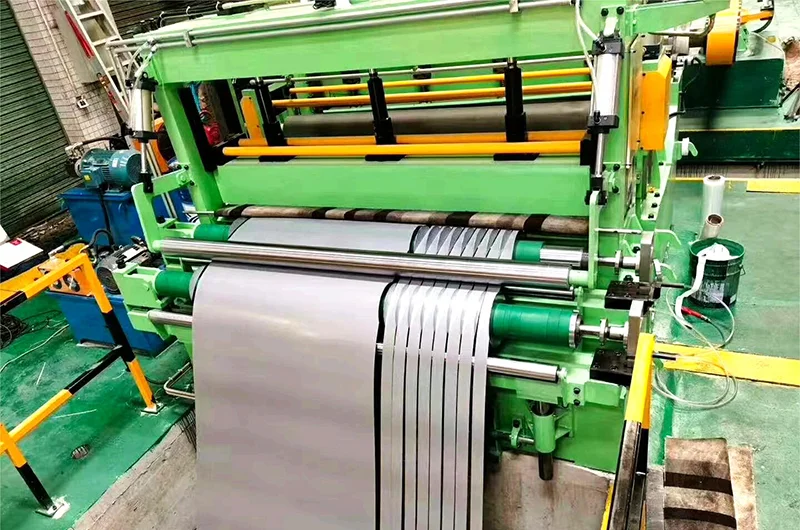
Metal coil slitting and rewinding machines are integral components in the metal processing industry, particularly in manufacturing and converting sectors. These machines are designed to cut large coils of metal into narrower strips, which can be further processed or utilized in various applications. The ability to produce custom widths and sizes makes these machines crucial for meeting specific customer requirements.
The operational process of a metal coil slitting and rewinding machine typically involves several stages. Initially, a large coil of metal, often referred to as the parent coil, is unwound. The machine utilizes a series of rotary knives or blades to slice the coil into the desired widths. This slitting process is highly precise, ensuring that the strips produced are uniform in size and quality. After slitting, the machine rewinds these narrower strips onto individual cores, resulting in manageable rolls that can be easily transported or processed further.
One of the key benefits of using metal coil slitting and rewinding machines is their efficiency in maximizing material utilization. By allowing manufacturers to create custom-sized strips, these machines reduce waste and enhance productivity. Moreover, the automation capabilities of modern slitting and rewinding machines have significantly improved, leading to faster production speeds and reduced labor costs. This automation also minimizes human error, ensuring consistent quality across all products.
In addition to efficiency, metal coil slitting and rewinding machines offer versatility. They can accommodate a wide range of materials, including stainless steel, aluminum, and other non-ferrous metals. This adaptability makes them suitable for various industries, including automotive, construction, and electronics, where different metal strip specifications are often required.
Moreover, maintenance and operation of these machines can be straightforward when following the manufacturer's guidelines. Regular inspections, proper lubrication, and timely replacement of worn parts are essential for ensuring longevity and optimal performance. Investing in training for operators can also enhance productivity and safety, as knowledgeable staff can effectively troubleshoot any issues that arise during operation.
In conclusion, metal coil slitting and rewinding machines play a pivotal role in the manufacturing and metal processing industries. Their ability to deliver precise cuts, enhance material efficiency, and adapt to various materials makes them a valuable asset for any manufacturing facility. By understanding their functionalities and benefits, businesses can better leverage these machines to optimize their production processes and meet evolving market demands.
The operational process of a metal coil slitting and rewinding machine typically involves several stages. Initially, a large coil of metal, often referred to as the parent coil, is unwound. The machine utilizes a series of rotary knives or blades to slice the coil into the desired widths. This slitting process is highly precise, ensuring that the strips produced are uniform in size and quality. After slitting, the machine rewinds these narrower strips onto individual cores, resulting in manageable rolls that can be easily transported or processed further.
One of the key benefits of using metal coil slitting and rewinding machines is their efficiency in maximizing material utilization. By allowing manufacturers to create custom-sized strips, these machines reduce waste and enhance productivity. Moreover, the automation capabilities of modern slitting and rewinding machines have significantly improved, leading to faster production speeds and reduced labor costs. This automation also minimizes human error, ensuring consistent quality across all products.
In addition to efficiency, metal coil slitting and rewinding machines offer versatility. They can accommodate a wide range of materials, including stainless steel, aluminum, and other non-ferrous metals. This adaptability makes them suitable for various industries, including automotive, construction, and electronics, where different metal strip specifications are often required.
Moreover, maintenance and operation of these machines can be straightforward when following the manufacturer's guidelines. Regular inspections, proper lubrication, and timely replacement of worn parts are essential for ensuring longevity and optimal performance. Investing in training for operators can also enhance productivity and safety, as knowledgeable staff can effectively troubleshoot any issues that arise during operation.
In conclusion, metal coil slitting and rewinding machines play a pivotal role in the manufacturing and metal processing industries. Their ability to deliver precise cuts, enhance material efficiency, and adapt to various materials makes them a valuable asset for any manufacturing facility. By understanding their functionalities and benefits, businesses can better leverage these machines to optimize their production processes and meet evolving market demands.
PREVIOUS:
Recent News
Contact LMS
Contact Us
Fax:
+86-20-87319225
Tel:
E-mail:
E-mail:
Address:
20AB Zhongqiao Building,Guangzhou, China,510000
Request Quote
If you have found your desired products, please feel free to contact, we are here for you 24/7.
Contact
LMS is a metal coil slitting line manufacturer
info@slittinglinelms.com
20AB Zhongqiao Building,Guangzhou, China,510000
Other links
Legal Disclaimer
Privacy Policy
Cookie policy
Quik Links