


news
The Essential Role of Metal Coil Slitting and Rewinding Machines in Modern Manufacturing
May 04,2026
The Essential Role of Metal Coil Slitting and Rewinding Machines in Modern Manufacturing
Table of Contents
- Introduction to Metal Coil Slitting and Rewinding
- Understanding Metal Coil Slitting
- The Importance of Slitting in Manufacturing
- The Rewinding Process Explained
- Key Features of Modern Slitting and Rewinding Machines
- Applications of Metal Coil Slitting and Rewinding Machines
- Benefits of Using Slitting and Rewinding Machines
- Choosing the Right Slitting and Rewinding Machine
- The Future of Metal Coil Processing
- Conclusion
- Frequently Asked Questions
Introduction to Metal Coil Slitting and Rewinding
In the dynamic landscape of modern manufacturing, **metal coil slitting and rewinding machines** play a pivotal role in enhancing productivity and efficiency. These machines are essential for transforming large rolls of metal into usable sheets or smaller rolls, catering to diverse industrial needs. As industries continue to evolve, understanding the significance of slitting and rewinding processes becomes paramount for manufacturers aiming for operational excellence.
Understanding Metal Coil Slitting
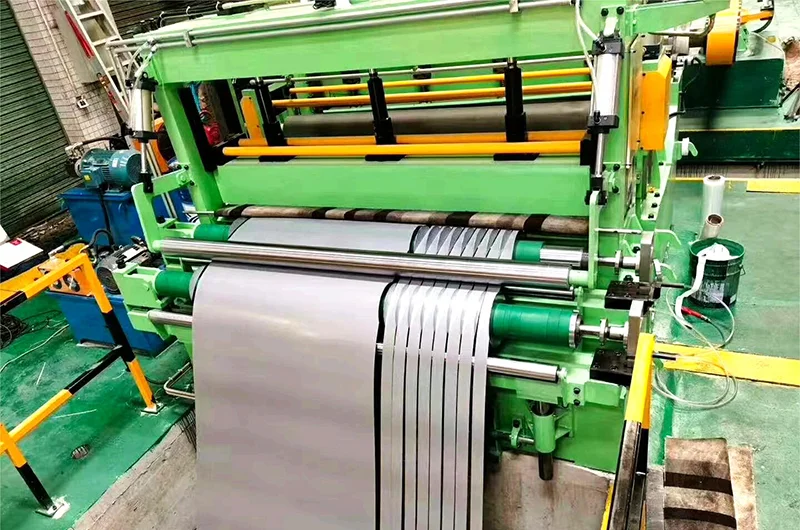
Metal coil slitting involves cutting wide rolls of metal into narrower strips. This process is crucial for various industries, including automotive, aerospace, and construction, as it allows for tailored metal components that meet specific requirements. The slitting process typically employs **rotating blades** that slice through the metal coil, ensuring precision and uniformity.
The Slitting Process Breakdown
1. **Coil Preparation**: The metal coil is mounted onto an unwind stand, ensuring it is properly aligned and secured.
2. **Slitting Operation**: As the coil unwinds, it passes through a series of circular knives that cut the metal into desired widths.
3. **Re-coiling**: After slitting, the narrower strips are recoiled onto spools, ready for further processing or shipping.
The Importance of Slitting in Manufacturing
Slitting serves several critical functions in manufacturing. Firstly, it allows manufacturers to create customized metal components that meet specific dimensional requirements. Secondly, it improves material utilization by minimizing waste during the manufacturing process. Finally, slitting enhances the flexibility of production lines, allowing manufacturers to respond swiftly to market demands.
Enhancing Material Utilization
By efficiently cutting metal into narrower strips, slitting maximizes the amount of usable material derived from a single coil. This process reduces scrap and optimizes the cost-effectiveness of production runs.
The Rewinding Process Explained
Once the slitting process is complete, the next step is rewinding. Rewinding involves taking the narrower strips and coiling them into manageable rolls for easy handling and transportation. This process ensures that the end product maintains its integrity and is ready for subsequent manufacturing stages.
Steps in the Rewinding Process
1. **Initial Unwinding**: The slitted strips are unwound from the slitting machine.
2. **Coiling Mechanism**: The strips are then wound onto mandrels, ensuring even tension and alignment.
3. **Final Packaging**: Once rewound, the rolls are packaged for delivery or further processing.
Key Features of Modern Slitting and Rewinding Machines
Modern slitting and rewinding machines come equipped with advanced features that enhance their efficiency and usability:
1. **Precision Control Systems**: These machines incorporate sophisticated control systems that allow for precise adjustments during slitting and rewinding.
2. **High-Speed Operation**: Many modern machines are designed to operate at high speeds, increasing throughput without compromising quality.
3. **Automatic Tension Control**: This feature ensures consistent tension throughout the slitting and rewinding processes, minimizing defects.
4. **User-Friendly Interfaces**: Operators benefit from intuitive interfaces that simplify machine operation, enhancing productivity.
Applications of Metal Coil Slitting and Rewinding Machines
Metal coil slitting and rewinding machines find applications in various industries, each with unique requirements:
1. **Automotive Industry**: Slitted metal strips are used for manufacturing parts like brackets, frames, and components.
2. **Construction Industry**: The construction sector utilizes slitted coils for roofing, siding, and structural applications.
3. **Aerospace Industry**: Precision metal strips are vital for manufacturing aircraft components, where weight and strength are critical.
Benefits of Using Slitting and Rewinding Machines
Investing in metal coil slitting and rewinding machines brings numerous advantages to manufacturers:
1. **Increased Productivity**: With high-speed operations and efficient processes, manufacturers can significantly increase production rates.
2. **Cost-Effective Manufacturing**: By maximizing material utilization and reducing waste, companies can lower production costs.
3. **Enhanced Product Quality**: Precision cutting and rewinding result in high-quality metal strips that meet stringent industry standards.
Choosing the Right Slitting and Rewinding Machine
Selecting the appropriate slitting and rewinding machine involves several considerations:
1. **Material Type**: Different machines are designed for specific metal types and thicknesses. Ensure compatibility with your materials.
2. **Production Volume**: Consider the machine's throughput capabilities in relation to your production needs.
3. **Customization Options**: Look for machines offering customization features to accommodate varying product specifications.
The Future of Metal Coil Processing
As technology progresses, the future of metal coil slitting and rewinding is poised for significant advancements. Integration with automation and Industry 4.0 concepts will enhance operational efficiency, allowing for smarter manufacturing solutions. The use of artificial intelligence and machine learning will further optimize processes, leading to more precise and cost-effective operations.
Conclusion
Metal coil slitting and rewinding machines are integral to modern manufacturing, enabling industries to efficiently produce tailored metal components while minimizing waste. Understanding their operational mechanisms, applications, and benefits allows manufacturers to enhance productivity and maintain quality standards. As technology continues to advance, embracing these machines will be crucial for staying competitive in the ever-evolving manufacturing landscape.
Frequently Asked Questions
1. What types of metals can be processed with slitting and rewinding machines?
Metal coil slitting and rewinding machines can process various metals, including steel, aluminum, brass, and copper, depending on the machine's specifications.
2. How does slitting affect metal quality?
Properly executed slitting enhances metal quality by ensuring precise dimensions and clean edges, which are vital for subsequent manufacturing processes.
3. Are modern slitting machines energy-efficient?
Many modern slitting machines feature energy-efficient designs and technologies that reduce power consumption while maintaining high productivity levels.
4. Can slitting and rewinding machines be automated?
Yes, many contemporary machines can be integrated with automation systems to streamline operations, improve efficiency, and reduce labor costs.
5. What maintenance is required for slitting and rewinding machines?
Regular maintenance, including blade sharpening and lubrication, is essential for ensuring optimal performance and prolonging the machine's lifespan.
In summary, understanding and implementing metal coil slitting and rewinding machines is crucial for manufacturers seeking to enhance their operations in today's competitive market.
PREVIOUS:
Recent News
Contact LMS
Contact Us
Sales hotline:
WhatsApp:
E-mail:
Address:
20AB Zhongqiao Building,Guangzhou, China,510000
Request Quote
If you have found your desired products, please feel free to contact, we are here for you 24/7.